
CBP Records FOIA Lawyer
Your crossing history belongs to you. CBP doesn't get to sit on it while your case clock runs.
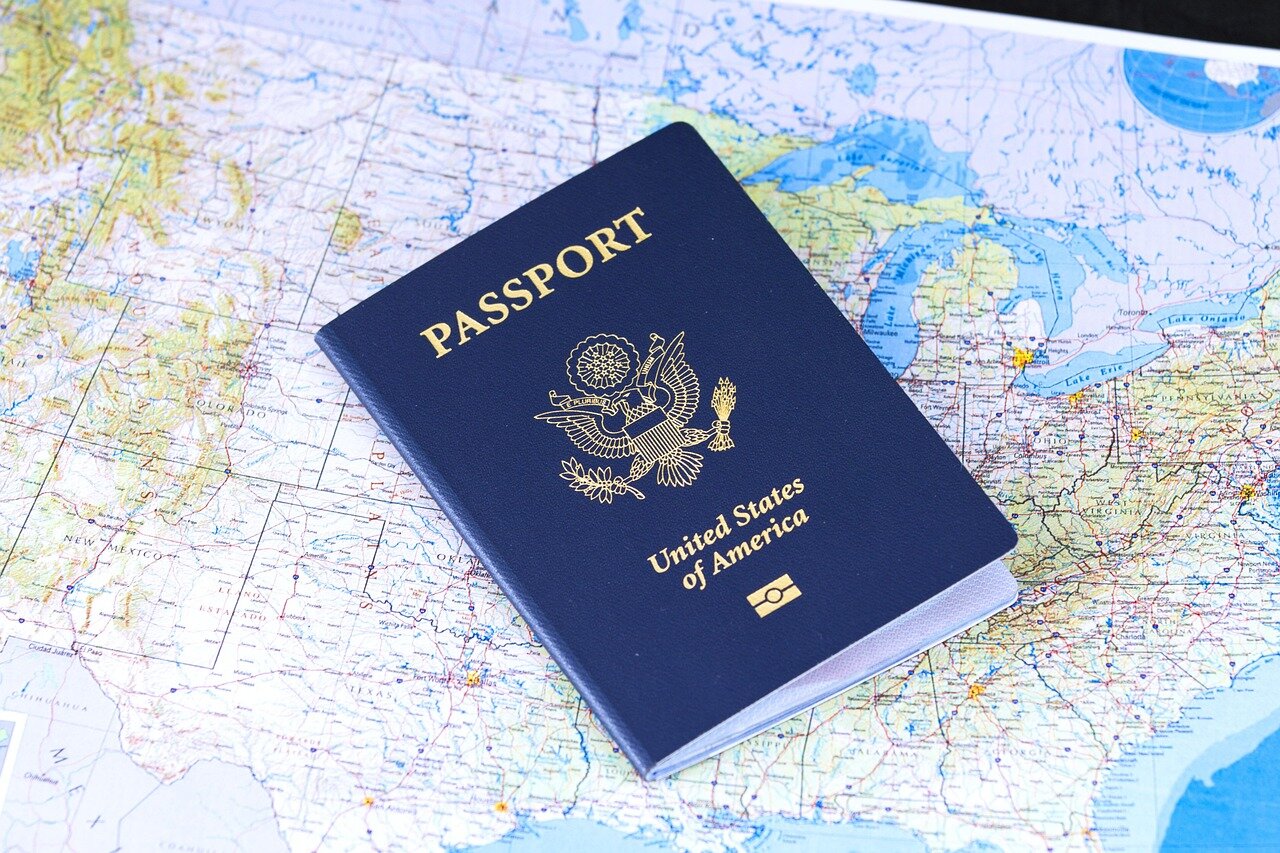
A green card holder gets pulled into secondary inspection at a port of entry. Months later, that same crossing becomes the center of a removal case or a naturalization filing. CBP keeps its own record of what happened that day, separate from the immigration court file.
A legal deadline governs how long CBP has to answer a Freedom of Information Act request for those records, and a lot of requesters never hear back inside that window. If that's you, and your hearing date is getting closer, this page is for you. If what you actually need is your A-file or an ICE custody record instead, the disambiguation section below sends you to the right page.
Novo Legal Group litigates federal records delays, and a CBP FOIA request that has gone silent past the statutory deadline is the kind of matter we evaluate for suit.
We file suit when the law allows it, and we tell you plainly, before you ever sign anything, what a lawsuit can and cannot do.
Why CBP FOIA Records Matter to Your Immigration Case
U.S. Customs and Border Protection decides what counts as the official record of your international travel to and from the United States, your apprehensions or detentions by Border Patrol, and your secondary inspections at ports of entry. CBP's own FOIA page lists exactly those three categories as what it will search and release.
For someone in removal defense, that record can help test a government claim about when or how a border encounter happened. Documenting continuous residence for a naturalization filing can rely on the same travel record. And for someone contesting an inadmissibility finding tied to a border stop, it is the government's own written account of what the officer recorded that day.
We treat CBP records requests as case infrastructure, not paperwork.
This spoke sits inside our broader FOIA litigation practice for immigration records, and the fuller record of what federal courts have ordered in records-access cases lives at our transparency and open-records results.
What CBP Records Can Show

We frame a CBP request around the records your case turns on, using the three categories CBP itself lists.
I-94 arrival and departure history
CBP describes the I-94 as an admission record that is "proof of legal visitor status." Its self-service site at i94.cbp.dhs.gov lets you pull your own admission number and a travel history covering the past 10 years, though the site itself notes that certain types of travel history may not be provided.
That history carries a warning most searchers miss. The site states that the travel history "is a tool to assist you but not an official record for legal purposes." CBP's FOIA page sends requests for I-94 records themselves to the I-94 website, and separately lists "records of international travel to/from the U.S." among the records a FOIA request can reach. Which record a court or USCIS filing calls for depends on the case.
Border crossing and entry/exit history
CBP's traveler records sit in a system DHS calls DHS/CBP-011 TECS, a name the agency's 2008 system-of-records notice says is "no longer an acronym" (73 FR 77778, Dec. 19, 2008). Border-crossing data has its own notice, DHS/CBP-007 Border Crossing Information, published Dec. 13, 2016 (81 FR 89957), covering "all individuals who enter, are admitted or paroled into, and (when available) exit from the United States, regardless of method or conveyance."
Two gaps matter before you file. CBP says it does not have complete records of Border Patrol apprehensions made before 2000, and it has no entry or exit records on anyone arriving or departing before 1982. If your border history predates either cutoff, CBP may not have the record. CBP notes that Border Patrol apprehension records from before 2000 may be in the A-file maintained by USCIS.
Secondary-inspection notes and officer reports
Secondary inspection is where an officer writes down what they saw, what you said, and why they pulled you aside. CBP lists secondary inspections at ports of entry as one of the three categories it will search and release.
If your attorney is requesting those notes on your behalf, CBP requires a signed Form G-28, Notice of Entry of Appearance as Attorney or Accredited Representative, or another form of signed consent, before it will release anything to a third party.
When CBP Won't Respond to Your FOIA Request
CBP changed how it accepts FOIA requests in January 2026. Effective January 22, 2026, the agency stopped accepting mailed, faxed, or emailed FOIA requests; every new request now goes through the CBP SecureRelease portal or FOIA.gov. There is no fee to file.
Once CBP receives your request, the clock starts. Under 5 U.S.C. § 552(a)(6)(A)(i), the agency must determine within 20 working days whether it will comply, excluding Saturdays, Sundays, and legal public holidays. That 20-day clock covers the decision, not necessarily full production. CBP sorts requests into processing tracks under 6 C.F.R. § 5.5(b), including a mandatory expedited track and additional tracks for simple versus complex requests, and it is a named, designated component under 6 C.F.R. part 5, Appendix A, with its own FOIA contact line at 202-325-0150.
If CBP misses the applicable deadline (20 working days, or up to 10 more working days if CBP gives written notice of "unusual circumstances"), 5 U.S.C. § 552(a)(6)(C) deems you to have exhausted your administrative remedies.
That is the hinge fact of this whole page.
Once exhaustion is deemed, you may be able to go straight to federal court, though a court can still give the agency more time if the government shows exceptional circumstances and due diligence.
The numbers back up why that hinge matters. CBP's FY2025 Annual FOIA Report data on FOIA.gov shows a backlog of 96,303 requests at the end of FY2025, down from 110,271 in FY2024, while backlogged appeals rose from 11 to 23. Expedited requests, supposed to move fastest, had a median of 304.5 days, longer than the complex median. It is what CBP reported.
Figures as reported on FOIA.gov, accessed November 5, 2026.
If you need expedited treatment, 6 C.F.R. § 5.5(e)(1) sets four grounds: an imminent threat to someone's life or physical safety, an urgency to inform the public tied to a requester primarily engaged in disseminating information, the loss of substantial due-process rights, or a matter of widespread and exceptional media interest connected to the government's own integrity.
CBP must notify you within 10 calendar days of receiving an expedited-processing request whether it is granting or denying that status, under 6 C.F.R. § 5.5(e)(4), and it follows this same generic test as every other DHS component; our research did not find a CBP-specific rule that automatically expedites a request just because you have an immigration-court date.
Appeals go through the same SecureRelease portal.
If the portal isn't available to you, CBP's FAQ page gives a mailing address: FOIA Appeals and Policy Branch, 90 K Street NE, Mail Stop 1177, Washington, DC 20229, and the appeal has to go out within 90 days of the date of your final response letter.
What a FOIA Lawsuit Can and Cannot Do
Start with what a lawsuit cannot do. A FOIA suit cannot force CBP to hand over records immediately, and it cannot promise you will win. Federal court review of a FOIA complaint takes its own time, and the outcome depends on what CBP withheld, why, and whether the court agrees with CBP's exemption claims.
Malik v. U.S. Department of Homeland Security, D.D.C. Case No. 22-cv-698 (CRC) (March 11, 2025), shows exactly that outcome. The requester sought records about a January 2021 Global Entry re-entry incident at Dallas-Fort Worth. The court largely granted summary judgment to the agencies and denied the requester's own motion, except as to one record withheld by USCIS. We put this case on the page because a FOIA suit is a tool with limits.
A lawsuit's real power is putting a federal judge between you and an agency that already missed its own deadline.
Courts review CBP's withholdings de novo, can examine withheld records in camera, and can order release of material that does not fall within a valid exemption.
Money is part of this calculation too. Under 5 U.S.C. § 552(a)(4)(E), a court may award reasonable attorney fees and litigation costs to a requester who has substantially prevailed, whether through a court order, an enforceable written agreement or consent decree, or a voluntary or unilateral change in CBP's position where the requester's claim is not insubstantial. That award is discretionary. A court does not have to grant it just because you won part of your case.
Whether a lawsuit is the right tool depends on the hearing date, the records CBP is holding, and how CBP has responded so far. A denial generally goes through CBP's administrative appeal first. Silence past the deadline is what can open the constructive-exhaustion route. Suit is one option on a short list.
CBP, USCIS, ICE, and A-File Records: Which Do You Need?
USCIS and the A-file
Your A-file, the government's master immigration file, is maintained by USCIS, not CBP. CBP's own FOIA page says it directly: records contained in the A-file "are processed by U.S. Citizenship and Immigration Services." If your immigration court date depends on the A-file itself rather than a specific border crossing, start with our A-file before immigration court page, or read about USCIS FOIA delay lawsuits if USCIS itself has gone silent on your request.
ICE custody and enforcement records
If your record involves detention, an enforcement action away from the border, or an ICE officer's file rather than a port-of-entry encounter, that request usually runs through a different federal FOIA office than CBP's.
CBP's own lane
CBP's FOIA page lists three kinds of records it handles: international travel history, Border Patrol apprehensions and detentions, and secondary inspections at ports of entry. That is the lane this page covers.
Frequently Asked Questions
How long does CBP have to respond to a FOIA request?
Under 5 U.S.C. § 552(a)(6)(A)(i), CBP must determine within 20 working days whether it will comply. That is the decision clock, not full production; FOIA.gov's CBP page lists FY2025 averages of 10 working days for simple requests and 159 working days for complex ones.
What if CBP ignores or denies my FOIA request?
Missing the applicable deadline (20 working days, extendable by up to 10 more for "unusual circumstances") deems you, under 5 U.S.C. § 552(a)(6)(C), to have exhausted your administrative remedies, which can open the way to federal court without waiting for an agency appeal. A denial, instead of silence, routes through a different door: appeal via the CBP SecureRelease portal, or by mail to the FOIA Appeals and Policy Branch, within 90 days of the denial letter.
Is suing CBP an option for my travel or entry records?
Once CBP's silence triggers constructive exhaustion under 5 U.S.C. § 552(a)(6)(C), you may be able to sue in federal court, and a court can order release of records wrongly withheld. That is not automatic.
I need my CBP record before my immigration court date. Is expedited processing available?
CBP follows the same four-ground test as every other DHS component under 6 C.F.R. § 5.5(e)(1), and it must tell you within 10 calendar days whether it is granting or denying that status. A grant of expedited processing moves the request to CBP's expedited track, but it does not set a production deadline, and CBP's FY2025 Annual FOIA Report data on FOIA.gov shows expedited requests taking a median of 304.5 days to close.
What's the difference between a CBP FOIA request and a USCIS A-file request?
A CBP FOIA request reaches CBP's own files: international travel records, Border Patrol apprehension records, and secondary-inspection notes from ports of entry. The A-file is the government's master immigration file, which CBP's own FOIA page says is "processed by U.S. Citizenship and Immigration Services." If your hearing or filing depends on the broader immigration history rather than a specific border encounter, the A-file is the record to look at first. We confirm which agency holds a record before we file a request, so it goes to the office that processes that record.
Talk to a FOIA Litigation Attorney
If your hearing date is weeks away, an attorney can review CBP's missed deadline against your hearing schedule. If you haven't filed a CBP FOIA request yet, CBP now accepts new requests only through the SecureRelease portal or FOIA.gov. If CBP has already missed its deadline, that missed deadline is the fact that matters next.
Why Novo Legal Group
A missed FOIA deadline can open the courthouse door under constructive exhaustion, and we evaluate that route when the hearing clock demands it. Novo Legal Group is a Spanish-first immigration practice. Every attorney is bilingual, and our intake team answers in Spanish.
Related Reading
- FOIA Litigation Lawyer for Immigration Records: the hub this spoke sits under.
- USCIS FOIA Delay Lawsuit: for A-file requests stuck at USCIS instead of CBP.
- A-File Before Immigration Court: for hearings that turn on the A-file itself.
- Deportation Defense Attorney: the removal case a CBP record can support.
- Transparency and Open-Records Cases: our broader federal-records litigation record.