
What Is a Licensed Legal Paraprofessional (LLP) in Colorado?
A plain-language guide to Colorado's newest family-law role — what an LLP can and can't do, and how Novo Legal Group makes it work for your family.


If you have ever been told that hiring a lawyer for your family-law case is going to cost more than you can afford, you are not alone. That gap — between people who need a divorce, a parenting-time order, or a child-support modification, and people who can actually afford full attorney representation — is exactly the gap Colorado's Licensed Legal Paraprofessional (LLP) role was created to fix.
I am Fernanda Soto, the LLP on the family-law team at Novo Legal Group. I work directly with Colorado families on dissolutions, parenting-time cases, child support, maintenance, and certain protection orders. I am not an attorney, and the rule that authorizes my role draws a clear line between what I can do and what I cannot. Knowing where that line is is the first step in deciding whether an LLP is the right professional for your family.
This page is the plain-language version of that answer. It is written by me, from inside the role, and it tells you what an LLP is, what we can do under Colorado rule, what we are not allowed to do, how attorney supervision works at Novo, and how the cost compares to a full family-law attorney.
Not sure whether your case fits the LLP scope? The fastest way to find out is to ask. Call (888) 746-5245 or schedule a consultation online.
GET A REAL ANSWER IN A CONSULTATIONWhat is a Licensed Legal Paraprofessional in Colorado?
A Colorado Licensed Legal Paraprofessional — LLP — is a professional licensed by the Colorado Supreme Court to represent clients in a defined set of family-law matters at a lower hourly rate than a full attorney. The role was created by the Colorado Supreme Court in 2023, and the first LLPs were licensed under the program in 2024 (per the Office of Attorney Regulation Counsel).
The rule that defines what an LLP can and cannot do is C.R.C.P. 207.1, titled "Licensed Legal Paraprofessionals' Scope of Authority to Practice." A companion rule, C.R.C.P. 207.8, governs how a person becomes an LLP in the first place — the education, experience, and exam requirements.
In plain English: an LLP is not a paralegal in the traditional sense (a non-licensed assistant to an attorney), and an LLP is not an attorney. An LLP is a third, distinct kind of legal professional, created specifically so that Colorado families can get represented help on dissolution, parenting time, child support, maintenance, and certain protection-order matters without having to either pay full attorney rates or face the system alone.
LLPs — and that includes me — are required to pass the Colorado LLP examinations, which test family-law substantive knowledge and professional conduct rules (C.R.C.P. 207.8(1)). Applicants must show 1,500 hours of substantive law-related practical experience, including 500 hours of Colorado family law experience, within the three years preceding the application (C.R.C.P. 207.8(7)). LLPs also take an oath of admission and are subject to the same character-and-fitness review the rule applies to attorney applicants (C.R.C.P. 207.8(8); C.R.C.P. 207.12).
That is the qualifying floor. What it means for you, as a client, is that a Colorado LLP is a licensed, examined, and rule-bound professional — not someone offering informal "paperwork help" outside any regulatory framework.
What an LLP can do in family law
C.R.C.P. 207.1(2) sets out the family-law matters an LLP is authorized to represent clients in. The list is exact. We follow it.
Under C.R.C.P. 207.1(2)(a)–(e), an LLP may represent a client in:
- Legal separation, declaration of invalidity of marriage, or dissolution of marriage or civil union (C.R.C.P. 207.1(2)(a))
- Initial allocation or modification of parental responsibilities (APR), including parentage determinations (C.R.C.P. 207.1(2)(b))
- Establishment or modification of child support and/or spousal maintenance (C.R.C.P. 207.1(2)(c))
- Protection orders, name changes, and adult gender-designation changes (C.R.C.P. 207.1(2)(d))
- Filing and responding to motions for remedial contempt citations under C.R.C.P. 107 (C.R.C.P. 207.1(2)(e))
Within those matters, C.R.C.P. 207.1(2)(g) lists the specific tasks an LLP is authorized to perform. Here is what that means in real terms when you hire me at Novo:
- I can sign you up as a client and enter into a written representation agreement (C.R.C.P. 207.1(2)(g)(i)).
- I can interview you about your case, advise you on which approved forms apply to your situation, and help you complete them — including parenting plans, separation agreements, child-support worksheets, sworn financial statements, and proposed orders (C.R.C.P. 207.1(2)(g)(ii)–(v)).
- I can prepare and file discovery requests and answers, trial management certificates, pretrial submissions, and exhibit and witness lists (C.R.C.P. 207.1(2)(g)(iv)).
- I can sign, file, and serve documents on your behalf (C.R.C.P. 207.1(2)(g)(vi)).
- I can review pension and retirement documents prepared by the other side and explain them to you (C.R.C.P. 207.1(2)(g)(vii)).
- I can counsel, assist, and advocate for you in negotiations and in mediation (C.R.C.P. 207.1(2)(g)(viii)). Mediation is where a lot of Colorado family cases actually get resolved, and an LLP can be at the table with you start to finish.
- I can fill in, sign, file, and serve a written settlement agreement (C.R.C.P. 207.1(2)(g)(ix)).
- I can communicate with the other party or their attorney on your behalf (C.R.C.P. 207.1(2)(g)(x)).
- I can explain a court order to you in plain language and tell you what it requires (C.R.C.P. 207.1(2)(g)(xii)).
- I can sit or stand at counsel table with you during a court proceeding, make statements and arguments in court on your behalf, answer the court's questions, address the court when the court directs, take notes, and help you understand what is happening and what the orders mean (C.R.C.P. 207.1(2)(g)(xiii)).
- I can advise you about additional resources you may need — parenting classes, for example — and file the certificates of completion (C.R.C.P. 207.1(2)(g)(xiv)).
- And, importantly: when your case has a complex issue that genuinely needs an attorney's analysis, I am required by rule to tell you that (C.R.C.P. 207.1(2)(g)(xv)).
That last point is part of what makes an LLP different from a do-it-yourself form service. The rule requires me to flag when your case has crossed into territory where you need a lawyer. At Novo, we have those lawyers in-house — more on that below.
One former limit no longer applies: since December 1, 2025, I can examine witnesses. Rule Change 2025(20) reserved the old C.R.C.P. 207.1(2)(h), which used to bar it, and rewrote C.R.C.P. 207.1(2)(g)(xiii) so that I can sit at counsel table with you, make statements and offers of proof, examine any witness, make arguments and objections, and address the court. I can also retain experts and prepare you for a testimonial hearing or deposition (C.R.C.P. 207.1(2)(g)(xi)). What sends a case to an attorney now is the subject matter, not the courtroom task. (The OARC's LLP FAQ summarizes the role at a higher level; this page hews to the live rule text, which is the controlling source.)
What an LLP CANNOT do
These are bright lines. They are not "generally" rules or "sometimes" rules. The rule that authorizes my role tells me, in plain text, that I am not allowed to do the following — and I do not.
Under C.R.C.P. 207.1(2)(f), as amended by Rule Change 2025(20), an LLP is not authorized to represent a client in resolving any of the following discrete issues that arise in an otherwise authorized representation:
- Registration of foreign orders (C.R.C.P. 207.1(2)(f)(i))
- Motions for or orders regarding punitive contempt citations under C.R.C.P. 107 (C.R.C.P. 207.1(2)(f)(ii)) — note: remedial contempt is in scope; punitive contempt is not
- Matters involving an allegation of common-law marriage where either party disputes the existence or date (C.R.C.P. 207.1(2)(f)(iii))
- Disputed-parentage matters where more than two parents or alleged parents are asserting or denying legal parentage (C.R.C.P. 207.1(2)(f)(iv))
- Matters where a non-parent's request for decision-making authority or parenting time is contested by at least one parent and the court has determined that the Indian Child Welfare Act applies to the proceeding, except as otherwise provided by law (C.R.C.P. 207.1(2)(f)(v))
- Preparation of or litigation regarding pre- or post-nuptial agreements (C.R.C.P. 207.1(2)(f)(vi))
- A dispute about the value of or income associated with a trust in which a party is a beneficiary (C.R.C.P. 207.1(2)(f)(vii))
- A dispute about a jurisdictional issue (C.R.C.P. 207.1(2)(f)(viii))
- Preparation of documents, other than an agreement addressing underlying property division, needed to effectuate the sale or distribution of the assets of a business entity or commercial property (C.R.C.P. 207.1(2)(f)(x)) — Rule Change 2025(20) excepted the property-division agreement itself, which an LLP may prepare
- Issues collateral to but directly affecting the family-law matter when those issues require analysis and advice outside an LLP's scope — specifically including immigration, criminal, and bankruptcy issues that could directly affect resolution of the matter; and the preparation of a qualified domestic relations order (QDRO) or other similar document implementing the division of retirement assets that could directly affect the resolution of the matter (C.R.C.P. 207.1(2)(f)(xii))
A note for families with an immigration case open. Having an immigration matter does not by itself mean we cannot help with your Colorado family-law case. It means the immigration piece has to be handled by an immigration attorney, not by an LLP. Novo's in-house immigration team handles that side; my work as an LLP stays inside the family-law scope C.R.C.P. 207.1 authorizes. The two run in parallel under one roof.
And we will not stretch any of these limits. If your situation falls outside what C.R.C.P. 207.1 authorizes me to handle, I will tell you so directly and route the case — to an attorney at Novo where the match fits, or to outside counsel where it does not. That honesty is not just professional courtesy; it is the rule (C.R.C.P. 207.1(2)(g)(xv)).
How attorney supervision works at Novo Legal Group
Here is a fact most pages about LLPs do not say out loud: Colorado does not require LLPs to be supervised by an attorney. A licensed LLP in good standing is authorized to practice independently within the scope C.R.C.P. 207.1 sets out. That is true of every LLP in the state.
At Novo, we go beyond what the rule requires — as a firm policy, not because the rule mandates it.
Every LLP case I handle has an attorney behind it. When a question on a case lands in close-call territory — a property issue that may be edging toward the C.R.C.P. 207.1(2)(f) carve-outs, a contested-parentage wrinkle, an immigration-status concern that ties into a parenting-time case — I escalate it to one of our supervising attorneys, Aaron Elinoff or Bryce Downer. That is not a sales line. It is how the family-law team works day to day.
What that means for you:
- Two sets of eyes on close calls. When I am not sure whether a development in your case has pushed it outside LLP scope, I do not guess. I bring it to an attorney.
- A clean handoff if your case crosses out of scope. If something happens in your case that requires attorney work — a witness examination at hearing, a contested QDRO, an immigration question that needs an immigration lawyer — you do not have to start over with a new firm. The attorney is already in the building.
- An honest answer at intake about whether an LLP is the right fit. Sometimes the answer is "you need a full attorney from day one." When that is the right answer, we will say so before you sign anything.
We have an in-house immigration team for the cases where family law and immigration overlap. We have an in-house criminal-defense attorney for the cases where a family-law matter intersects with a criminal matter. The LLP service at Novo runs inside that team, not as a standalone shop.
 Aaron Elinoff
 Bryce Downer
How firm malpractice insurance covers your LLP case
Another fact most pages do not say out loud: Colorado does not require an LLP to carry malpractice insurance. Under C.R.C.P. 207.14(2)(a)(4), an LLP must disclose, in the annual registration statement to the Office of Attorney Regulation Counsel, whether the LLP currently carries professional liability insurance and whether the LLP intends to maintain it during private practice. That disclosure is publicly available on the Supreme Court Office of Attorney Registration website (C.R.C.P. 207.14(2)(c)).
The rule requires disclosure. The rule does not require coverage.
Every LLP file at Novo is covered by the firm's malpractice insurance policy. That posture is a firm policy and a deliberate differentiator from the many independent LLPs who, under the rule, are not required to carry coverage at all. The coverage status is reflected in the public OARC registration disclosure.
In plain English: you get the lower hourly rate of an LLP and the same kind of firm-policy insurance backing that the firm's attorneys have. We treat that as table stakes for what a serious LLP practice should look like.
How much does an LLP cost compared to an attorney?
The reason the Colorado Supreme Court created the LLP role at all was access to justice. The category of person who can afford a typical Colorado family-law attorney's hourly rate and the category of person who actually files a dissolution or APR case in Colorado are not the same category. The gap between those two groups is the reason the LLP role exists.
At Novo, the LLP rate is substantially lower than the supervising-attorney rate — approximately half the typical Colorado family-law attorney rate, in practice.
Here is what that ratio looks like in real cases:
- Uncontested or low-conflict dissolution. Most of the work is forms, financial-disclosure prep, mediation, and a final-orders hearing. An LLP can handle all of that under C.R.C.P. 207.1(2)(g). At roughly half the typical attorney rate, the total cost on a straightforward dissolution comes in materially lower.
- APR / parenting-time modification. Forms work, mediation, and a hearing where I can sit at counsel table with you. Same math.
- Child-support establishment or modification. Worksheets, sworn financial statements, mediation, and a hearing. Same math.
- Protection-order matter inside a family case. In-scope under C.R.C.P. 207.1(2)(d). Same math.
Readers comparing the LLP and attorney paths on a parenting case can start with our Colorado parental responsibilities overview to see what an APR case actually involves before deciding which professional fits.
The headline framing matters: "cheaper" is not the same as "less protected." Your case is staffed by a licensed LLP, backed by an attorney for close-call escalations, and covered by the firm's malpractice policy. That combination is the differentiator — not the rate alone.
Why hire Novo's LLP Fernanda Soto for your Colorado family-law case
The LLP role in Colorado is young — the program licensed its first LLPs in 2024 — and a lot of solo LLP practices have launched in the time since. What makes Novo's LLP service different is what surrounds it.
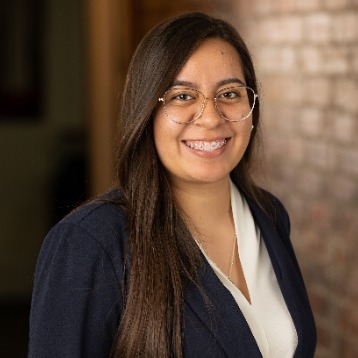
I am a Licensed Legal Paraprofessional in good standing under C.R.C.P. 207.8. I work only in Colorado, only in family-law matters that fall inside C.R.C.P. 207.1's authorized scope. I am a native Spanish speaker, which matters for the families I work with most often: parents whose first language is Spanish, who have heard the term "paralegal con licencia" from a sister or a friend, and who want to know whether the option is real and whether the person on the other end of the phone can talk to them in their actual language. The answer is yes.
I am not an attorney. The C.R.C.P. 207.1 scope list is a real list, and there are family-law matters that need an attorney — and we have attorneys in the building. Aaron Elinoff and Bryce Downer are the partners I work under as a matter of firm policy. When my work intersects with immigration or criminal exposure on a family-law case, our in-house immigration and criminal-defense teams are part of the same conversation.
If you are a Colorado family weighing whether to start with an LLP or an attorney, the short version is this: we will tell you the truth at intake about which one fits, and we are set up so that you do not have to choose firms based on a guess.
You can read more about my background on my Novo Legal bio page. For the firm's broader family-law work, see the Colorado Family Law pillar page. For a side-by-side breakdown of the choice between an LLP and a full attorney, see LLP vs. attorney in Colorado family law.
Frequently asked questions about Colorado LLPs
Is an LLP the same as a paralegal?
No. A traditional paralegal is a non-licensed assistant who works under an attorney's supervision and is not allowed to represent clients independently. A Colorado Licensed Legal Paraprofessional is licensed by the Colorado Supreme Court under C.R.C.P. 207.1 to represent clients directly in a defined set of family-law matters, at a lower hourly rate than a full attorney. Two different roles. Same five letters in the word "paralegal."Can an LLP go to court for me?
Yes. Under C.R.C.P. 207.1(2)(g)(xiii), an LLP can sit or stand at counsel table with you during a court proceeding, make statements and offers of proof, examine any witness, make arguments and objections, address the court, and help you understand what is happening. Rule Change 2025(20), effective December 1, 2025, reserved the former C.R.C.P. 207.1(2)(h) — the provision that used to bar witness examination. What routes a case to an attorney now is the subject matter, not the courtroom task: the carve-outs in C.R.C.P. 207.1(2)(f).Can an LLP help with my divorce if my spouse has an attorney?
Yes. C.R.C.P. 207.1(2)(g)(x) authorizes an LLP to communicate directly with the other party or with the other party's lawyer. You do not need to match attorney-for-attorney to be represented. What matters is that the matter itself fits inside C.R.C.P. 207.1(2)(a)–(e), and that none of the C.R.C.P. 207.1(2)(f) carve-outs (such as a contested-jurisdiction issue or a QDRO question) is going to drive the case.Does an LLP have to be supervised by an attorney?
No — not under the rule. C.R.C.P. 207-series rules do not require attorney supervision of a licensed LLP. Some firms (including Novo) provide attorney backup as a matter of firm policy because it is good for clients and good for catching close-call scope questions early, but that is a firm policy, not a Colorado rule requirement.Does an LLP have to carry malpractice insurance?
No — not under the rule. C.R.C.P. 207.14(2)(a)(4) requires an LLP to disclose annually whether they carry professional liability insurance and whether they intend to maintain it during private practice. That information is publicly available on the OARC registration website (C.R.C.P. 207.14(2)(c)). At Novo, every LLP file is covered by the firm's malpractice insurance policy as a matter of firm policy.How is an LLP different from a do-it-yourself online divorce service?
A do-it-yourself service gives you forms. An LLP gives you representation. An LLP can enter into a written representation agreement with you (C.R.C.P. 207.1(2)(g)(i)), advise you on your case, prepare and file court documents, communicate with the other side, advocate for you in mediation, and appear at counsel table with you in court — all within the C.R.C.P. 207.1 scope. The relationship is a professional one, governed by the Colorado LLP Rules of Professional Conduct.What if my case has immigration consequences?
Then we route. C.R.C.P. 207.1(2)(f)(xii) expressly takes "issues collateral to but directly affecting the matter" — specifically including immigration issues — outside the LLP scope when those issues require analysis outside the LLP's authority. That is one of the reasons Novo's LLP service runs inside a firm with an in-house immigration team. We do not pretend immigration issues are not there; we get them in front of an immigration attorney.What if I started my case alone and want to bring in an LLP partway through?
You can. C.R.C.P. 207.1(2)(i) is explicit: nothing in the LLP scope rule prevents a client from acting pro se in the same matter alongside the LLP, or from retaining a lawyer at any time. Bringing in an LLP at the modification stage, or at the mediation stage, or in advance of a contested final-orders hearing where you want a professional next to you, is a normal way the role gets used.¿Habla español?
Sí. Fernanda Soto, our LLP, is a native Spanish speaker, and Novo Legal Group serves clients in English and Spanish. The Spanish version of this page is at ¿Qué es un Paralegal con Licencia en Colorado?Talk to a Family-Law LLP at Novo Legal Group
If your Colorado family-law case fits inside the LLP scope — dissolution, parenting time, child support, maintenance, a protection-order matter inside a domestic case — we want to be honest with you about the cost, the timeline, and how the work gets done.
To schedule a consultation with Novo Legal Group, call (888) 746-5245 or schedule a consultation online.
