
Is There a Problem With the Signature on Your USCIS Application? How to Tell, and How It's Fixed
Aaron Elinoff · Managing Partner, Novo Legal Group · Colorado Bar #46468 · Immigration & Civil Rights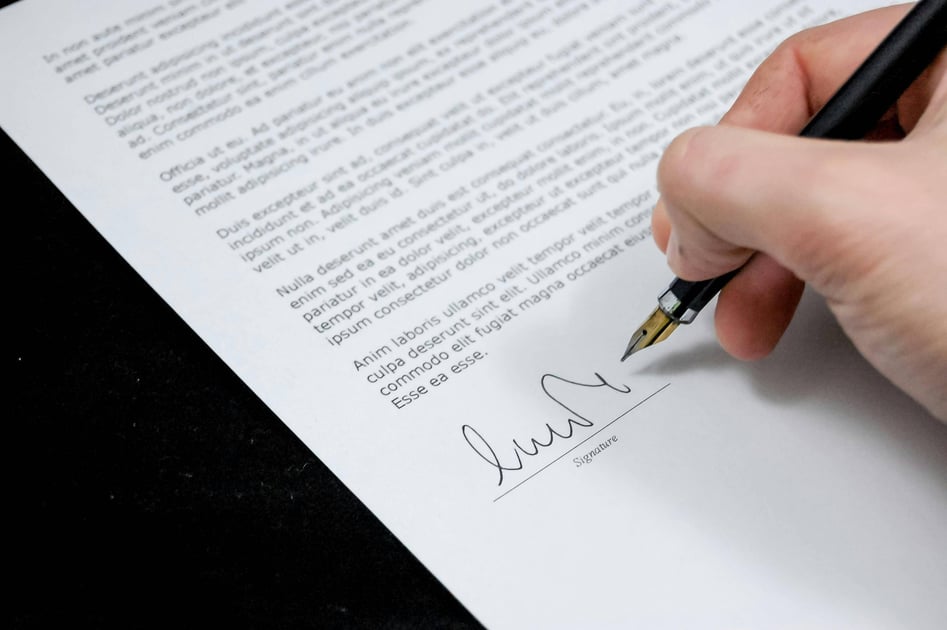
Last reviewed: November 2026, against the USCIS Policy Manual and current federal regulations.
A signature that isn't yours can change how USCIS treats a filing. Here's how to tell, and what a lawyer checks before anything changes.
Consider a composite example.
A man outside Houston has had his Form I-765 work permit renewed twice through his former immigration firm. He never created a USCIS account of his own.
When a new lawyer finally pulled his file, the signature on both renewals was identical, pixel for pixel, three years apart.
Nothing in his case has been denied. His renewal is pending, and his job depends on it.
A signature problem like his is a paperwork problem, and a paperwork problem often has a paperwork path. The hard part is that only the right fix works, and the right one depends on what was filed, how it was signed, and where the case stands today.
The time to find out is before signing anything new.
What follows: what counts as a valid signature, how to spot a problem, and what fixing it looks like depending on where your case stands.
Not sure whether your signature is a problem? Schedule a consultation
What Counts as a Valid Signature on a USCIS Form
Paper Forms
On a paper form, USCIS requires your own handwritten signature (8 C.F.R. § 103.2(a)(2)). A photocopy, scan, or fax of an original signed page is accepted unless the form's instructions say otherwise, as long as it is a copy of a page you actually signed by hand (USCIS Policy Manual, Vol. 1, Part B, Ch. 2).
Online Filings
For forms that can be filed online, you sign from your own USCIS account, not someone else's. If a lawyer prepares the forms, USCIS generates a one-time passcode, and you enter it in your own account to review the drafts before anything is submitted (USCIS, Online Filing for Attorneys and Accredited Representatives). You open the form yourself, read it, and enter your own full legal name to sign it. Your lawyer can't sign it for you.
What Doesn't Count
Several things look like a signature and aren't:
- A typed name, "/s/," or a signature created by software or a stamp.
- An image of a signature copied from one document and pasted onto another.
- Someone else signing in your place. The exceptions are narrow: a parent or legal guardian signing for a child under 14, or a legal guardian signing for an adult who is legally incompetent.
- Someone filing from your account using your password, without you reviewing or approving the submission.
What USCIS Can Do With an Invalid Signature
If USCIS accepts a filing and later determines the signature was not valid, USCIS may reject or deny the request (8 C.F.R. § 103.2(a)(7)(ii)(A)). USCIS does not allow a deficient signature to be replaced, corrected, or cured on the same filing. What this means for a specific filing depends on the facts of that filing, and that is a question for a lawyer who has read the file, not a rule of thumb.
We treat this as the question that decides everything else on this page, because the fix a case needs depends entirely on the answer.
How to Tell if Your Filing Has a Signature Problem
Start with the documents, not your memory. A complete copy of what was filed, your USCIS online account if one exists in your name, and your A-file through a Freedom of Information Act request are the three places a signature problem usually shows up first. Reviewing the A-file before any court date matters just as much when the question is a signature, not a hearing.
If your case was filed by Alexandra Lozano Immigration Law, or by the firm that took over its cases, this is where to start. See our page for former clients of Alexandra Lozano Immigration Law.
When we review a file for a signature problem, we look for the same signature appearing identically on filings years apart, a form the client never saw before, a USCIS account the client never created, and dates that don't line up with anything in the client's own records.
A signature you didn't make is worth checking for a second reason.
If someone else signed a form, they may also have written facts you never reviewed.
Is there false information in your immigration file? is the companion question, and it has its own answer.
This isn't a test you can pass or fail on your own. It's a review a lawyer runs against the whole file.
Not sure whether your signature is a problem? Schedule a consultation
How It's Fixed, Depending on Where Your Case Stands
We sort every signature case into one of four buckets below, because the right fix depends entirely on what USCIS has already done with the filing.
No Decision Yet
If nothing has been decided yet, one option is to withdraw the original and file a new, properly signed request. Whether a withdrawal is needed, and whether it's the right move, depends on the type of case.
A withdrawal cannot be taken back, and the priority or processing date of the withdrawn filing cannot be applied to the new one (8 C.F.R. § 103.2(b)(6), (b)(15)). What else a withdrawal changes depends on the type of case. For an asylum application, a U visa, or a work permit tied to a pending case, the original filing date can matter in ways that differ by form, and USCIS has not published one rule covering all of them. That is why this step belongs with a lawyer.
You Got an RFE or NOID
A Request for Evidence or a Notice of Intent to Deny on a signature issue means USCIS isn't sure who signed, or whether that signer had the authority to. Both ask the same underlying question. An RFE or NOID on a signature issue asks you to show that the original signature was valid when the form was filed. It is not a chance to sign the form again. Most people answer one with a lawyer.
It Was Rejected
A rejection means USCIS treats the filing as never properly filed, and the fee comes back.
The fix is to refile correctly. Also check whether the gap caused by the rejection created any lapse in status or work authorization.
It Was Denied
A denial is heavier than a rejection. USCIS generally keeps the fee, and the case has already been decided once.
The form's motion and appeal rights still apply. They are used to argue that the original signature was valid. A newly signed page does not count as a new fact. Most motions and appeals are due within 30 days of the decision (33 if it was mailed), or refiling may be the better path. Bring the decision letter, including any Form I-290B deadline it states, to the consultation so a lawyer can map which option fits your facts.
Why You Shouldn't Just Re-Sign and Mail It In
Mailing in a new signature page doesn't fix the filing it's attached to. It creates a second record that doesn't match the first, and a mismatch is its own problem.
When a file already holds a second signature page, we review it as part of the same problem.
Your signature certifies the whole form under penalty of perjury (8 C.F.R. § 103.2(a)(2)), not just the line where you signed. Re-signing something means adopting everything already written in it, including anything false. If a prior filing has a statement in it you didn't make, read is there false information in your immigration file? before signing anything new.
A signed Form G-28 names your attorney of record. It doesn't transfer your signature authority to anyone else.
If the problem traces back to work a prior firm charged you for and didn't do correctly, you may have refund rights depending on where the case was filed.
See our page on refund rights.
Your signature is yours. Nobody should be putting it on anything without you.
What to Do First
If you suspect a problem, here's where to start, before anything else:
- Get a complete copy of everything filed in your name.
- People in this situation generally wait to sign anything new, including an "updated" page from anyone, until a lawyer has read the whole file.
- A replacement filing is usually prepared with a lawyer, because a withdrawal can't be undone.
- Bring every USCIS notice you've received, receipts, RFEs, rejections, and decisions, to the consultation.
Documents beat memory every time.
We start every new signature case with the complete file, because memory alone can't settle what was signed.
The lawyer-change checklist is a free download, and it lists what to pull together before you meet with a new lawyer.
Frequently Asked Questions
Is my case lost if the signature isn't mine?
Not necessarily. Many signature problems can be addressed with a new, properly signed filing or by challenging USCIS's decision. Whether that works depends on whether the original filing date mattered to your case, for example for an asylum deadline or a place in line. Read the section above on how it's fixed depending on where your case stands before assuming the worst.
Can I just mail in a signed page?
No. USCIS does not accept a new signature as a fix for the original filing, and a new page can create a second record that doesn't match the first. See the section above on why re-signing on your own creates its own risk.
Do I have to pay again?
Generally, yes; a new filing carries its own fee (8 C.F.R. § 103.2(b)(15)). Fees don't transfer between filings. If the problem traces back to a prior firm's work, you may have refund rights; see our refund rights page for details.
Does this affect my work permit?
It depends on the form and on where the case currently stands. A pending Form I-765 work-permit renewal, a pending Form I-485 adjustment case, and a pending asylum application each carry different stakes if the underlying filing has to be withdrawn or refiled. We go over what a client's filing is exposed to before any new paperwork is prepared. A lawyer who reviews your file can tell you what's at risk in your specific case.
Why Novo Legal
This firm exists because immigrants and refugees need lawyers who read their files before anything else happens to them. We treat a signature a client never made as the reason that client needs someone looking at the whole filing before the next form goes to USCIS. Every attorney at Novo Legal Group is bilingual, our intake team answers calls in Spanish, and Aaron Elinoff, our Managing Partner, reviews how every page like this one frames the law.
Have a Lawyer Review Your File
If a filing in your name carries a signature you don't recognize, the time to find out is before you sign anything else. We read every page of the file before we tell a client what it needs. At Novo Legal Group, every attorney is bilingual, and Spanish is our intake team's default.
Schedule a consultationPhone: (888) 746-5245