
TL;DR
- The Board of Immigration Appeals (BIA), the appellate body that reviews decisions from Immigration Judges in removal cases, published Matter of Chamorro Castillo, 30 I&N Dec. 170 (BIA 2026), as a precedent decision on October 22, 2026. The decision holds that when a hearing notice mailed to the only address on file is returned as undeliverable, the Immigration Court has no obligation to take any additional steps to effect notice before entering an in absentia removal order.
- The Board specifically rejects two steps the Ninth Circuit had suggested: calling the respondent at a phone number on file (such as the number listed on the ICE Form I-830 reporting a release from detention) and checking DHS’s A-file for additional addresses. The Board invokes its characterization of EOIR as “neutral quasi-judicial” and argues that investigative steps would compromise that role.
- This is the third direct Ninth Circuit confrontation in two weeks, after Matter of B-S-A-N- (October 9, rejecting the Ninth Circuit’s disfavored-group analysis) and Matter of J-E-D-C- (October 19, rejecting the Ninth Circuit’s inherently-unbelievable standard for affidavits in motions to reopen). The pattern is now an institutional story in its own right.
- Chief Appellate Immigration Judge Garry Malphrus wrote this decision, bringing him to four of the most consequential procedural decisions in five weeks: Matter of Morales Cuxun (September 24, bond), Matter of L. Ramirez (October 16, U visa continuances), Matter of J-E-D-C- (October 19, affidavit credibility), and now Matter of Chamorro Castillo (October 22, notice).
- Attorneys handling motions to reopen based on lack of notice should rebuild their strategy around corroborating evidence that affirmatively documents the failure of notice, preserve every argument for petition for review litigation (United States v. Rivera-Valdes and Meza Medina v. Blanche remain binding Ninth Circuit precedent), and treat the 180-day deadline for in absentia motions as a hard constraint.
The Board of Immigration Appeals has published a precedent decision that effectively eliminates any backup duty for the Immigration Court when a hearing notice fails to reach a respondent. In Matter of Chamorro Castillo, 30 I&N Dec. 170 (BIA 2026), Interim Decision #4262, decided October 22, 2026, the Board held that when mail sent to the only address in the record provided for a respondent is returned as undeliverable, there are no additional reasonably available or practicable steps the Board or an Immigration Court can take to effect notice.
Before continuing with the doctrinal analysis, a direct note for community readers: if you missed a hearing in Immigration Court because you did not receive the hearing notice (your mail was returned, your address changed, your mailbox filled up, your apartment complex misdelivered mail, or any similar reason), the legal standard that governs your motion to reopen has substantially changed. Talk to an experienced immigration attorney immediately. The 180-day deadline for in absentia motions to reopen based on lack of notice is a hard constraint, and strategy that worked before this decision needs to be rebuilt.
This piece explains what the decision holds, how the Board narrows the due process framework from Mullane v. Central Hanover Bank & Trust Co. and Jones v. Flowers, why this is the third direct Ninth Circuit confrontation in two weeks, how the pattern of Chief AIJ Malphrus panels now shapes the series, and what practitioners and noncitizens should do differently now that the Board has declined to recognize any backup notice duty. Matter of Chamorro Castillo is the twenty-third precedential immigration decision in the ongoing series shifting law in the government’s direction.
What Happened in Matter of Chamorro Castillo
Jose Israel Chamorro Castillo was placed in removal proceedings on February 22, 2019, when the Department of Homeland Security (DHS) filed a notice to appear with the Immigration Court. Four days later, on February 26, 2019, DHS filed an ICE Form I-830, the form DHS uses to notify the Immigration Court of a respondent’s release from immigration detention and the address the respondent reported, stating that Chamorro Castillo’s address was 300 Abert Ave., Richland, WA 99352-4408. The Form I-830 also listed a phone number for him.
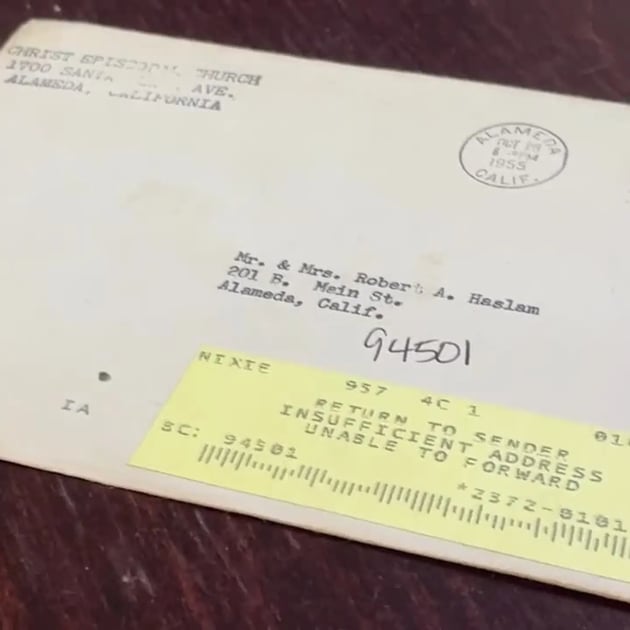
On September 9, 2019, more than seven months after DHS reported the address, the Immigration Court mailed a notice of hearing to that address. The notice was returned to the Immigration Court in an envelope labeled, “RETURN TO SENDER NOT DELIVERABLE AS ADDRESSED UNABLE TO FORWARD.”
Chamorro Castillo did not appear for the hearing on January 8, 2020. The Immigration Judge ordered him removed in absentia under INA § 240(b)(5)(A).
On March 24, 2020, Chamorro Castillo filed a motion to reopen with the Immigration Court, representing himself pro se. He alleged that he never received the hearing notice. Documents filed with the motion confirmed that the 300 Abert Ave. address was correct. In a reply brief, Chamorro Castillo submitted a letter from a postal employee explaining that his mailbox had become full, his mail had been brought back to the post office, held there for 10 days, and then returned to sender as unclaimed.
The Immigration Judge denied the motion to reopen on April 7, 2020, finding that Chamorro Castillo had constructive notice of the hearing. The Board affirmed in October 2020.
Chamorro Castillo filed a petition for review in the Ninth Circuit. In January 2026, the Ninth Circuit granted the petition and remanded for the Board to apply the court’s intervening decision in United States v. Rivera-Valdes, 157 F.4th 978 (9th Cir. 2025), which addressed when due process requires the government to take additional steps after learning that notice has failed. On remand, the Board requested supplemental briefing from the parties. DHS filed a supplemental brief. Chamorro Castillo did not respond.
On October 22, 2026, the Board issued the decision now before us. It dismissed the appeal and used the dismissal to announce precedent effectively narrowing Rivera-Valdes to its specific wrong-address fact pattern.
CONTEXT WORTH NAMING: THE PRO SE DIMENSION
Jose Israel Chamorro Castillo had no attorney at any stage of these proceedings before the agency. When the Board requested supplemental briefing on the applicability of Rivera-Valdes, DHS filed a brief and he did not. The Board then used his case, with that unrebutted DHS brief as part of the record, to issue binding precedent that governs every similarly situated respondent going forward. The procedural asymmetry between a pro se respondent who did not submit supplemental briefing and the Senior Counsel for DHS who did is itself part of how this precedent was produced.
What the BIA Decided
The Board’s holding is a single sentence that governs an enormous category of in absentia motion-to-reopen cases: “When mail sent to the only address in the record provided for a respondent is returned as undeliverable, there are no additional reasonably available or practicable steps the Board or an Immigration Court can take to effect notice.”
The Board applied this new rule to Chamorro Castillo’s case and dismissed his appeal. In doing so, the Board specifically rejected two steps that the Ninth Circuit had suggested were reasonable in Rivera-Valdes and in Meza Medina v. Blanche, Nos. 20-70017, 24-5144, 2026 WL 2795426 (9th Cir. Sep. 18, 2026).
First, the Board rejected the suggestion that an Immigration Judge should call the phone number on file. The decision reasons that placing this burden on Immigration Courts generally is not reasonable or practicable considering their overburdened dockets and quasi-judicial role. The Board also invokes the risk of improper ex parte communications and the risk of violating confidentiality obligations under 8 U.S.C. § 1367(a)(2), which protects information about certain respondents (including victims of domestic violence and other qualifying crimes).
Second, the Board rejected the suggestion that the agency should check DHS’s A-file for additional addresses. The Board explains that neither the Board nor Immigration Judges have access to the A-file maintained by DHS, and that A-files contain information DHS does not share with EOIR or with the respondent. The Board acknowledges in a footnote that it would be appropriate for DHS to inform the Board or the Immigration Court when DHS becomes aware of a different address, but places no corresponding obligation on EOIR.
The Due Process Framework and Rivera-Valdes
Understanding what the Board just narrowed requires understanding what Rivera-Valdes established and how it fits within the broader due process framework for notice.
The Supreme Court’s decision in Mullane v. Central Hanover Bank & Trust Co., 339 U.S. 306 (1950), is the foundational case on constitutional notice. Mullane holds that notice must be “reasonably calculated, under all the circumstances, to apprise interested parties of the pendency of the action and afford them an opportunity to present their objections.” This standard governs across many areas of law where the government or a party seeks to adjudicate rights without the subject present.
The Supreme Court applied Mullane to the context of returned mail in Jones v. Flowers, 547 U.S. 220 (2006), a tax-sale case. Jones held that when a state knows its notice has not been delivered, the state must take additional reasonable steps to attempt to effect notice if practicable to do so. The Jones Court recognized that constitutional notice is not simply a matter of ticking a procedural box; it requires actual engagement with whether the chosen method is likely to work under the circumstances.
The Ninth Circuit applied Mullane and Jones to the immigration-notice context in United States v. Rivera-Valdes, 157 F.4th 978 (9th Cir. 2025), a criminal unlawful-reentry case where the question was whether the underlying removal was constitutionally valid. The Supreme Court denied certiorari in Rivera-Valdes, 146 S. Ct. 2696 (2026). The Ninth Circuit then extended Rivera-Valdes to civil removal proceedings in Meza Medina v. Blanche, decided September 18, 2026.
Under Rivera-Valdes and Meza Medina, when the government knows that notice has failed, it has an obligation to take additional reasonable steps to effect notice if practicable to do so. The question in Chamorro Castillo’s case was whether, when a hearing notice is returned as undeliverable, there are reasonable additional steps the agency could take, such as calling a phone number on file or checking a DHS record for a more recent address.
The Board’s answer is: no. The decision does not reject Mullane, Jones, or Rivera-Valdes as doctrine. The Board accepts that the Mullane and Jones standards apply. The Board narrows the practical scope of Rivera-Valdes by holding that no additional step is “reasonably available or practicable” for an Immigration Court after mail is returned, which effectively limits Rivera-Valdes to the specific fact pattern where the agency mailed to a wrong address (not where notice failed for delivery reasons at a correct address).
The Board’s “Neutrality” Argument
The reasoning the Board uses to justify declining any backup notice duty is worth examining because it will shape how practitioners frame their arguments going forward.
The Board characterizes Immigration Judges and Appellate Immigration Judges as “neutral quasi-judicial officers who exercise their independent judgment and discretion to adjudicate whether an alien is removable and eligible for relief from removal in cases brought by DHS.” Removal proceedings are described as adversarial, with DHS as the prosecutor and EOIR as the neutral adjudicator.
From this framing, the Board argues that if the Immigration Court undertook investigative steps to locate respondents, “it could give the appearance of collusion” with DHS. The Board explains: “If DHS were to use any information independently obtained by the Immigration Court or the Board for detention, removal, or other law enforcement action against a respondent, EOIR could be viewed as being in collusion with DHS to effectuate the respondent’s detention and removal.”
This argument has a certain structural logic. Judges in adversarial proceedings do not typically help one party locate the other. The Board is correct that EOIR is not an investigative agency and does not have the resources to conduct address investigations at scale.
The practical consequence of the argument, however, cuts in a specific direction. By the time a hearing notice is returned to the Immigration Court, DHS has already filed its charging document, obtained a hearing date, and (where applicable) already filed the Form I-830 reporting the address and phone number it provided to the respondent at release. Doing nothing from that point forward does not neutrally advantage both parties; it produces an in absentia removal order against the respondent, which is the outcome DHS sought when it filed charges. The “neutrality” framing produces outcomes that systematically favor DHS because DHS has already acted, and inaction by EOIR means DHS’s charges proceed to removal unopposed.
“When mail sent to the only address in the record provided for a respondent is returned as undeliverable, there are no additional reasonably available or practicable steps the Board or an Immigration Court can take to effect notice.”
MATTER OF CHAMORRO CASTILLO, HOLDING
The ex parte communication and § 1367 confidentiality arguments the Board invokes deserve similar attention. An Immigration Judge calling a respondent to confirm a hearing date is not plainly an ex parte communication in the traditional sense; ex parte doctrine addresses communications about the merits of a pending matter, and administrative confirmation of scheduling falls outside that scope. Section 1367 protects certain categories of noncitizens (victims of domestic violence, trafficking, and specified crimes) from information disclosure, but a call to confirm a hearing to the respondent personally would not disclose any § 1367-protected information to anyone other than the respondent. These arguments are legally thin but doctrinally insulating: they allow the Board to characterize an obvious practical step as legally problematic without engaging whether the step would actually produce the harms described.
The Third Ninth Circuit Confrontation
With Matter of Chamorro Castillo, the Board has now directly narrowed binding Ninth Circuit precedent three times in approximately two weeks. The pattern deserves direct treatment because it is itself a story about how the Board is positioning itself relative to the federal courts of appeals.
On October 9, 2026, in Matter of B-S-A-N-, 30 I&N Dec. 145 (BIA 2026), the Board openly rejected the Ninth Circuit’s 2025 decision in Lapadat v. Bondi, 145 F.4th 942 (9th Cir. 2025), on “disfavored group” asylum analysis. The Board sided with the First, Third, Seventh, and Eleventh Circuits that reject the Ninth Circuit framework.
On October 19, 2026, in Matter of J-E-D-C-, 30 I&N Dec. 162 (BIA 2026), the Board rejected a line of Ninth Circuit precedent dating back to 1986 requiring Immigration Judges and the Board to accept affidavit statements in motions to reopen as true unless inherently unbelievable. The Board effectively adopted the dissenting opinion from Trigueros Quizar v. Blanche, September 2026, as agency policy.
Today, in Matter of Chamorro Castillo, the Board narrows United States v. Rivera-Valdes and Meza Medina v. Blanche by holding that no additional notice steps are reasonable or practicable for Immigration Courts after mail is returned, which forecloses the specific additional steps the Ninth Circuit identified.
Chamorro Castillo differs structurally from the first two confrontations because this case is on remand from the Ninth Circuit specifically for the Board to apply Rivera-Valdes. The Board complied with the remand instruction in form by addressing Rivera-Valdes, while reaching the same denial result and issuing precedent that limits Rivera-Valdes’s practical scope. This is a distinct form of institutional engagement: not simply announcing disagreement with circuit precedent, but applying it narrowly on remand and codifying that narrow application as agency policy. The Ninth Circuit will have to decide, on the next petition for review of a similar in absentia case, whether the Board’s narrow application honored the remand or circumvented it.
Common features of the three decisions, read together, continue to suggest an institutional pattern that goes beyond coincidence. Each decision engages recent Ninth Circuit precedent (Lapadat in 2025, Trigueros Quizar in September 2026, Rivera-Valdes and Meza Medina in 2025 and September 2026 respectively). Each decision announces the agency’s departure explicitly, bypassing the narrower distinctions that would otherwise have allowed the Board to operate around the circuit precedent. Each decision produces outcomes that systematically favor the government.
The Malphrus Pattern
Chief Appellate Immigration Judge Garry Malphrus wrote the Chamorro Castillo decision. He has now written or sat on the panel for four of the most consequential procedural decisions in the series within approximately five weeks.
Matter of Morales Cuxun, decided September 24, 2026, addressed bond proceedings for noncitizens with DUI and domestic violence histories. Chief AIJ Malphrus was on the panel.
Matter of L. Ramirez, 30 I&N Dec. 157 (BIA 2026), decided October 16, 2026, overruled a 13-year Board precedent that had protected U visa petitioners in removal proceedings. Chief AIJ Malphrus wrote the opinion.
Matter of J-E-D-C-, 30 I&N Dec. 162 (BIA 2026), decided October 19, 2026, rejected the Ninth Circuit’s inherently-unbelievable standard for affidavits in motions to reopen. Chief AIJ Malphrus was on the panel.
Matter of Chamorro Castillo, 30 I&N Dec. 170 (BIA 2026), decided October 22, 2026, narrows due process notice obligations. Chief AIJ Malphrus wrote the opinion.
Four consecutive consequential procedural decisions in five weeks, with Chief AIJ Malphrus either writing or on the panel. This is observable fact, and practitioners tracking the series should assume that further decisions in the Malphrus pattern are coming. The pattern affects strategy because it suggests the direction of further Board decisions and informs how practitioners should allocate attention across preservation of arguments, federal court strategy, and client counseling.
Note for Practitioners in the Ninth Circuit
For attorneys handling in absentia motions to reopen in cases that will be reviewed in the Ninth Circuit, the posture after Matter of Chamorro Castillo is complicated. The Board will apply the new rule at the agency level. On petition for review, however, United States v. Rivera-Valdes and Meza Medina v. Blanche remain binding on the Ninth Circuit panel reviewing the agency decision. The specific question for the Ninth Circuit will be whether the Board’s on-remand application of Rivera-Valdes, together with its new precedent limiting Rivera-Valdes’s practical scope, honored the court’s remand or circumvented it.
Ninth Circuit practitioners should preserve every available argument at the agency level, including the specific argument that calling a phone number on file is a reasonable and practicable step under Rivera-Valdes and Meza Medina, the argument that the ex parte and § 1367 concerns the Board invokes do not apply to a direct call to the respondent, and the argument that the Board’s construction of “practicable” effectively nullifies the Jones v. Flowers framework.
UNITED STATES COURT OF APPEALS FOR THE NINTH CIRCUIT
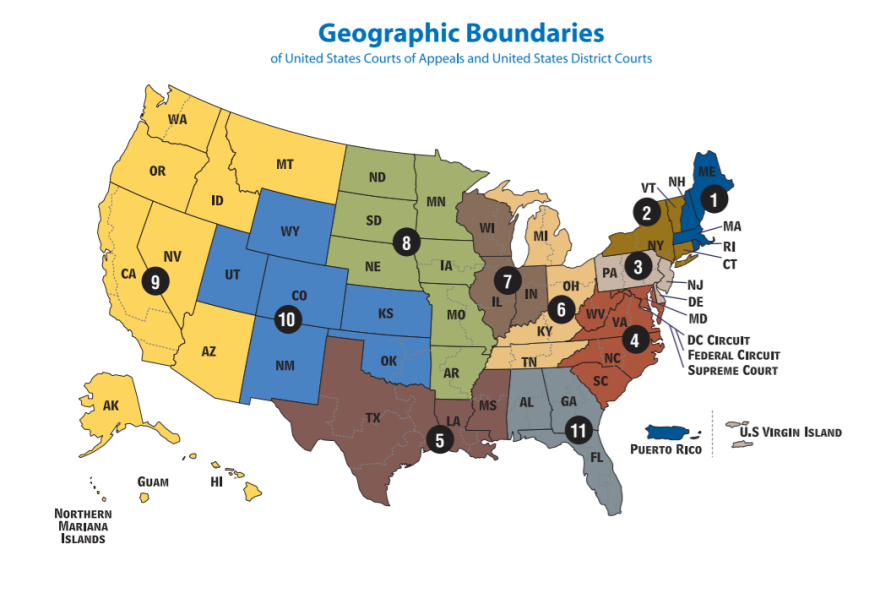
The Ninth Circuit covers nine states and two Pacific territories, representing nearly 20% of the U.S. population.
Ninth Circuit states and territories: Alaska, Arizona, California, Hawaii, Idaho, Montana, Nevada, Oregon, Washington, plus Guam and the Northern Mariana Islands.
For attorneys outside the Ninth Circuit, Matter of Chamorro Castillo is binding at the agency level and will govern in absentia motion-to-reopen practice. In circuits that have not applied Mullane and Jones to the immigration notice context, the Board’s new rule largely codifies what was already the operating framework. In circuits that have engaged the question (the Second, Third, and Ninth Circuits have each addressed aspects of it), the Board’s rule will govern unless and until circuit precedent develops to address it.
What This Means for Attorneys Handling In Absentia Motions
For immigration attorneys handling motions to reopen based on lack of notice, Matter of Chamorro Castillo requires several adjustments to standard practice.
Documenting the failure of notice with corroborating evidence has become essential, because a declaration from the respondent alone is substantially weaker under the Board’s new credibility framework from Matter of J-E-D-C-, 30 I&N Dec. 162 (BIA 2026). Corroborating evidence can include letters from postal employees documenting delivery issues, mailbox or apartment complex management confirmation of mail problems, documentation of the respondent’s diligence in updating the address or seeking assistance, hospital or medical records if the respondent was incapacitated during the delivery window, and third-party witness declarations from household members or neighbors who can speak to the mail situation. The letter from a postal employee that Chamorro Castillo filed with his motion is a model of the kind of corroboration that strengthens a notice-failure argument, though it was not enough to prevent dismissal here.
Treating the 180-day deadline for in absentia motions as a hard constraint is especially important now, because the Board’s substantive narrowing of due process notice protections leaves fewer avenues for later relief. Under INA § 240(b)(5)(C)(i), motions to reopen based on exceptional circumstances must be filed within 180 days of the removal order. Motions to reopen based on lack of notice under INA § 240(b)(5)(C)(ii) have no deadline but face the Chamorro Castillo standard.
Preserving the record for federal court review is now a baseline requirement in Ninth Circuit cases, because the circuit precedent conflict will be worked through at the appellate level. Every argument available at the agency level should be made, including arguments about whether the Board’s construction of “practicable” is consistent with Jones v. Flowers and with Rivera-Valdes’s on-remand application.
Addressing the Board’s neutrality framework head-on is now part of competent practice, because the Board has signaled that it will deploy “neutrality” reasoning to decline investigative steps that would favor respondents. Practitioners can argue that neutrality cuts both ways and that in the specific context of a returned notice, calling a phone number on file is a scheduling communication that falls outside the category of investigative steps aiding enforcement.
Building the client-counseling conversation around address updates and emergency contact information has become essential at intake and at every stage of representation. Clients should be counseled on Form EOIR-33 for address changes, on the risks of mail delivery issues at apartment complexes and shared addresses, and on the importance of informing the attorney immediately of any address change or mail problem.
Monitoring for further series developments is now part of competent current practice, because Matter of Chamorro Castillo is the third Ninth Circuit confrontation in two weeks and the fourth Malphrus-led decision in five weeks. The direction of further Board decisions in this area is not difficult to predict.
What This Means for Noncitizens with In Absentia Removal Orders
For noncitizens who have received an in absentia removal order because they did not receive their hearing notice, and for their families, the practical consequences of Matter of Chamorro Castillo are significant.
If you have an in absentia removal order and you believe the reason you missed the hearing was that you did not receive the notice, consult with an experienced immigration attorney immediately. The legal standard that applies to your motion to reopen has changed, and the strategy for your case may need to be rebuilt.
If your mail was returned, misdelivered, held at the post office, or affected by any other delivery issue, gather documentation of those circumstances as soon as possible. Letters from your postal carrier or local post office, mailbox-related correspondence from your apartment complex, photographs of mailbox conditions, and any records confirming you lived at the address where notice was mailed can all help establish the circumstances of nonreceipt.
If you have moved since you provided your last address to the Immigration Court or DHS, file Form EOIR-33 to update your address with the Immigration Court as soon as possible. Address updates do not resolve a prior in absentia order, but they protect you going forward and can support arguments about your diligence.
If you believe you did not understand the notice process because of language barriers, limited literacy, or inexperience with U.S. mail systems, document the circumstances with an attorney’s help. The Chamorro Castillo standard is strict, but the underlying substantive protections against removal through other forms of relief (asylum, cancellation of removal, adjustment of status) remain available depending on your specific circumstances.
Understand that lack of notice is one of the stronger grounds for reopening an in absentia case under INA § 240(b)(5)(C)(ii), and it does not have the 180-day deadline that applies to exceptional-circumstances motions. The Board’s decision narrows what counts as a successful lack-of-notice argument, but it does not eliminate the ground. Working with an attorney to build the strongest possible record remains worthwhile.
What Matter of Chamorro Castillo Does Not Change
The decision shifts in absentia motion-to-reopen practice significantly, but its scope has limits worth stating clearly.
The decision does not change the statutory grounds for reopening an in absentia removal order. Under INA § 240(b)(5)(C)(i), a respondent may file a motion to reopen within 180 days based on exceptional circumstances. Under INA § 240(b)(5)(C)(ii), a respondent may file a motion at any time based on lack of notice or lack of competency to attend. Both grounds remain available. What has changed is the standard the Board will apply to the lack-of-notice ground when notice was mailed to a correct address and returned as undeliverable.
The decision does not change the substantive relief available after reopening. Asylum, withholding of removal, protection under the Convention Against Torture, cancellation of removal, adjustment of status, and other forms of relief continue to operate under their own frameworks. The question is whether a respondent can get to those merits proceedings in the first place after an in absentia order.
The decision does not change the Immigration Court’s obligation under INA § 239(a)(2) and 8 C.F.R. § 1003.15 to serve a notice of hearing. The agency must still mail the notice. What has changed is what the agency must do when that mail comes back.
The decision does not foreclose petitions for review at federal courts of appeals. United States v. Rivera-Valdes and Meza Medina v. Blanche remain binding on panels of the Ninth Circuit reviewing agency decisions. The question of how the Board’s narrow application of Rivera-Valdes on remand squares with the court’s remand instruction will be worked through on petition for review.
The decision does not change DHS’s obligations. DHS is still required to file Form I-830 when a respondent is released from custody, 8 C.F.R. § 1003.19(g), and the Board acknowledges in a footnote that it would be appropriate for DHS to inform the Board or the Immigration Court when DHS becomes aware of a different address for a respondent.
Frequently Asked Questions
What is an in absentia removal order?
An in absentia removal order is an order of removal entered by an Immigration Judge when a noncitizen fails to appear at a scheduled hearing. Under INA § 240(b)(5)(A), the Immigration Judge may order a noncitizen removed in absentia if DHS establishes by clear, unequivocal, and convincing evidence that the noncitizen was given written notice of the hearing and is removable.
What is a motion to reopen based on lack of notice?
Under INA § 240(b)(5)(C)(ii), a respondent who received an in absentia removal order may file a motion to reopen at any time based on the ground that the respondent did not receive notice of the hearing in accordance with INA §§ 239(a)(1) or (a)(2). Unlike motions based on exceptional circumstances, lack-of-notice motions do not have a 180-day deadline.
What is the Mullane / Jones due process framework?
Under Mullane v. Central Hanover Bank & Trust Co., 339 U.S. 306 (1950), constitutional notice must be “reasonably calculated, under all the circumstances, to apprise interested parties of the pendency of the action and afford them an opportunity to present their objections.” Under Jones v. Flowers, 547 U.S. 220 (2006), when the government knows that notice has failed, it must take additional reasonable steps to effect notice if practicable to do so.
What did United States v. Rivera-Valdes hold?
In United States v. Rivera-Valdes, 157 F.4th 978 (9th Cir. 2025), the Ninth Circuit held that the notice afforded to noncitizens subject to removal is governed by the due process standards articulated in Mullane and Jones. The court held that where the government learns that its notice efforts have not succeeded, that knowledge triggers an obligation on the government’s part to take additional reasonable steps to effect notice if practicable. The Supreme Court denied certiorari, 146 S. Ct. 2696 (2026).
Does Matter of Chamorro Castillo apply retroactively?
Precedent decisions of the Board generally apply to all cases pending at the agency level that have not yet reached a final decision. Attorneys with motions to reopen pending before Immigration Judges or on appeal before the Board should assume the new standard applies.
Can Ninth Circuit precedent still protect my case on petition for review?
Yes, within the limits of federal court review. Rivera-Valdes and Meza Medina remain binding on panels of the Ninth Circuit until modified by the Ninth Circuit itself or by the Supreme Court. The question of how to reconcile the Board’s narrow application of Rivera-Valdes with the court’s remand instruction will be worked through at the appellate level.
Where can I find Matter of Chamorro Castillo?
Matter of Chamorro Castillo, 30 I&N Dec. 170 (BIA 2026), Interim Decision #4262, is a precedent decision of the Board of Immigration Appeals decided October 22, 2026. It is available through the Department of Justice Executive Office for Immigration Review website.
Why Novo Legal
Novo Legal Group is a bilingual, community-rooted human rights firm. Every attorney on our team is fluent in English and Spanish. Our litigation team handles motions to reopen in absentia removal orders, due process challenges, appeals to the Board of Immigration Appeals, and petitions for review before federal courts of appeals including the Ninth and Tenth Circuits. We approach notice-failure cases with a careful record-building strategy that treats the respondent’s declaration as one piece of a larger evidentiary presentation, documents the full circumstances of nonreceipt with corroborating evidence, and preserves every available argument for federal court review when the agency denies relief. If you or a family member has received an in absentia removal order and did not receive the hearing notice, contact us. We will tell you what we would do given your specific facts.
SCHEDULE A CONSULTATION
(888) 746-5245 | novo-legal.com/contact
Related Reading
- Matter of J-E-D-C- Explained: BIA Rejects Ninth Circuit Affidavit Rule
- Matter of L. Ramirez Explained: BIA Ends U Visa Continuance Rule
- Matter of B-S-A-N- Explained: BIA Creates a ‘Safe Countries’ List
- Matter of Morales Cuxun Explained: Bond Denied Over DUI and DV
- Matter of M-R-I- Explained: Advance Parole Can End Asylum Protection